What Is FF&E And Why Does It Matter?
July.27,2026
Have you decided to renovate your Project but struggle to figure out which furniture, finishes, fittings and paint colours will complement one another? Interior designers solve this puzzle during the FF&E phase, one of the core stages of interior design. You may now be wondering: what exactly is FF&E, and how does the FF&E workflow operate? Don’t worry—this blog breaks down both questions, so keep reading to find out.

What Is FF&E?
First, what does FF&E stand for? It is an abbreviation widely used by interior designers, short for Furniture, Fixtures and Equipment. Originating as a specialized design system tailored for hotel interior fit-outs, FF&E design is a critical stage where designers curate and specify suitable furniture, finishes and decorative elements for interior spaces. It also serves as the foundational reference for turning interior design concepts into tangible, completed projects.
The scope of FF&E design spans movable furnishings, decorative materials, soft furnishings, operational amenities, electrical appliances, mechanical systems, sanitary ware and architectural hardware. For high-end interior projects, the scope is far less complex by comparison.

Breakdown of FF&E Categories
● Furniture: Freestanding, movable items that can be rearranged anywhere within a space. Examples include sofas, dining sets, sideboards, display cabinets and study desks.
● Fixtures: Permanent elements fixed in place. Ceiling lights, built-in cabinetry, radiators, bathroom and kitchen taps, and fitted wardrobes all fall under this category.
● Equipment: Some designers use the term “accessories” interchangeably here. This category covers electronics such as laptops and air purifiers, plus all decorative accent pieces used to style a space.
The FF&E Project Workflow
Now that we have defined FF&E, let’s walk through its end-to-end process. Interior designers follow six core steps for residential FF&E projects, detailed below:
Step 1: Research & Data Collection

Research is an extensive, time-intensive process that involves far more than simply matching a space’s aesthetic, colour palette and ambience. Designers must first verify the dimensions of all proposed furniture and fixtures, as sizing directly impacts the efficient use of available space.
At this stage, designers also analyse the client’s age, lifestyle and functional requirements. They compile detailed data for all shortlisted items, including product imagery, pricing and specifications. All information is categorised and organised professionally to prepare for the next phase.
Step 2: Client Presentation
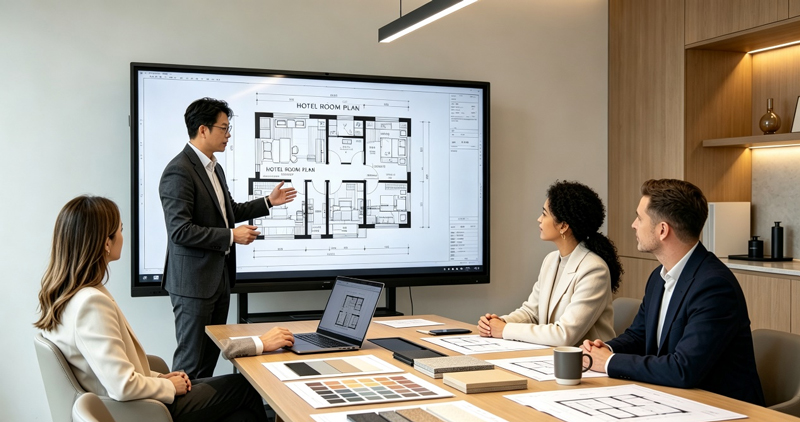
This is the second stage of the FF&E workflow. Designers present their curated selection of furniture and finishes to clients, paired with floor plans to illustrate placement layouts. For larger projects, 3D visualisations are created to showcase the finished look and atmosphere of the space once all furnishings are installed.
This stage often involves multiple rounds of revisions. Clients provide feedback and propose new ideas, leading to back-and-forth adjustments until they are fully satisfied with the final FF&E schedule.
Step 3: FF&E Procurement
Once the client approves the full FF&E selection, designers liaise with suppliers to lock in formal quotations and confirm lead times. Post-pandemic supply chain disruptions have made variable delivery timelines far more common, so designers must carefully assess which orders face potential delays to prioritise purchasing and avoid derailing the overall project schedule. After the client signs off on the final quotation, all FF&E items are formally ordered.

Step 4: FF&E Logistics & Delivery Management
Residential projects may source all furnishings from a single supplier, yet most FF&E packages involve multiple separate vendors, making this phase highly complex and requiring rigorous oversight from designers.
Designers track the real-time status of every order to flag shipped, delivered or delayed goods. If any item faces hold-ups, the designer must circle back to Step 1 to source alternative products that meet all design, budget and timeline criteria.

Step 5: FF&E Installation
Many assume installation is solely the responsibility of construction teams, yet interior designers play a vital role here. They coordinate closely with installers to specify the exact placement, alignment and fitting method for every fixture and furnishing as per the approved design plan.

Step 6: Final Handover to Client
This marks the final stage of the FF&E process. Once all furniture, fixtures and equipment have been delivered and fully installed, the newly fitted interior space is formally handed over to the client.