Custom Hotel Furniture as a Brand Differentiator: Beyond Standard Guestroom Packages
October.29,2026
A hotel room can be comfortable and still feel like every other room a guest has seen. A Custom Hotel Furniture Manufacturer helps owners and designers shape a more recognizable experience, from the desk layout to the finish on a headboard. For projects comparing a custom hotel furniture manufacturer for boutique hotels, the right partner can turn brand goals, room dimensions, and operating needs into a coordinated furniture plan. This guide explains what custom hotel furniture means, where it is used, and how to take a project from brief to installation.

What Does a Custom Hotel Furniture Manufacturer Do?
A custom hotel furniture manufacturer develops, produces, and coordinates furniture made for a specific hospitality project. Depending on the contract, the work may include design development, shop drawings, material samples, prototypes, production, packing, delivery, and installation support.
In the industry, this work is often called FF&E, short for furniture, fixtures, and equipment. Furniture is only one part of an FF&E package, but it can include beds, headboards, nightstands, wardrobes, desks, chairs, sofas, tables, vanities, and lobby seating. A manufacturer may work from an interior designer’s drawings or help refine the design with the hotel team.
Custom does not always mean that every item has a completely new shape. A project might use a standard furniture frame with a project-specific size, wood finish, fabric, hardware, or feature. The important distinction is that the product is selected or adapted to fit the project’s design and operating requirements, rather than chosen only from a standard catalogue.
Why Hotels Move Beyond Standard Guestroom Packages
Standard packages can simplify selection, but they may not suit every building or brand. Older properties can have narrow walls, unusual corners, or existing services that affect where furniture fits. New hotels may need a design that supports a specific brand story, room type, or guest profile.
Custom furniture brings design choices and practical constraints into the same conversation. For example, a desk can be sized to fit a compact room, while a luggage bench can be placed where guests can reach it without blocking a route. A headboard can coordinate with the room’s lighting plan, while still allowing access for maintenance.
The aim is not to make every item unusual. It is to make the full room feel intentional and usable. A clear design brief helps the team decide which items need custom dimensions or details and which can remain standard to manage cost and production complexity.
Where Custom Hotel Furniture Is Used
- Guestrooms and suites: Beds, headboards, nightstands, wardrobes, desks, lounge chairs, luggage benches, and minibar cabinets can be designed around room size, storage needs, and the hotel’s visual identity.
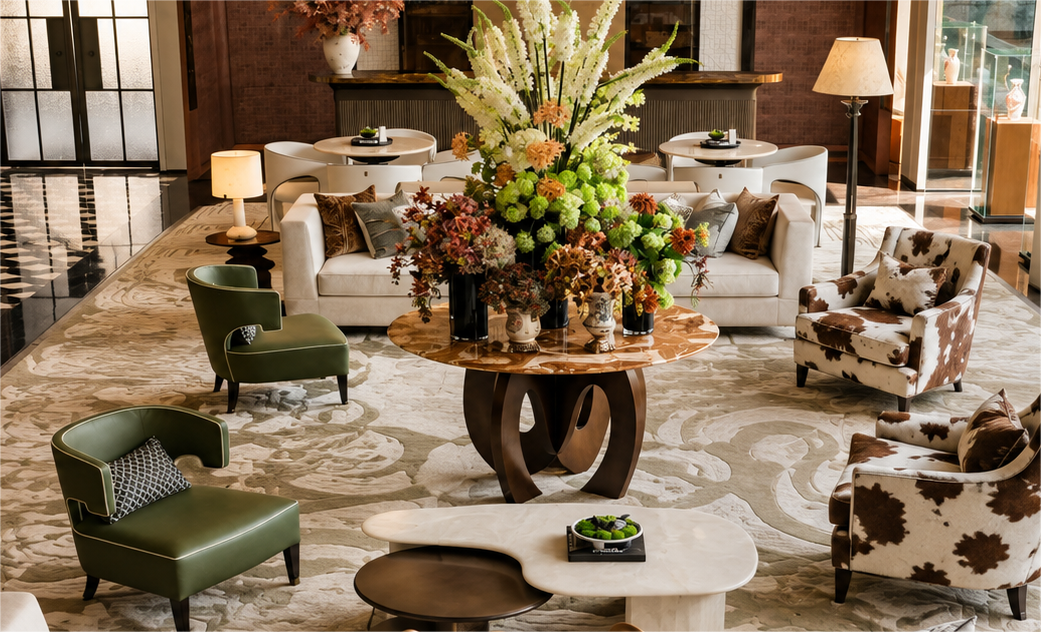
- Hotel lobbies: Reception desks, benches, occasional tables, and lounge seating can support guest flow while creating a clear first impression. Designers should consider cleaning access, traffic patterns, and how furniture groups affect circulation.
- Restaurants and bars: Tables, banquettes, host stands, and service stations can be planned for the layout, seating mix, and daily cleaning routine.
- Meeting and event spaces: Tables, storage units, and seating may need to support more than one room setup. Confirm dimensions, handling requirements, and storage plans before approving production.
- Extended-stay properties: Work surfaces, wardrobes, dining furniture, and storage can be designed for guests who stay longer and need more everyday function.
- Resorts and boutique hotels: Furniture can reflect local materials or design references while meeting the hotel’s maintenance, comfort, and replacement needs.
How a Custom Hotel Furniture Manufacturer Can Strengthen Brand Identity
Guests experience a hotel through many small details. Furniture is one of the most visible and frequently used parts of a room, so its scale, finish, shape, and materials can reinforce the design concept. A manufacturer can help carry a consistent design language across different spaces without making every room identical.
For example, a hotel may use the same wood tone and hardware across guestroom casegoods, then vary the seating fabric between a lobby and a restaurant. A distinctive headboard profile can become a recurring visual feature, while different room sizes use adjusted dimensions. These decisions make a brand feel coherent and help the team avoid selecting pieces that compete with one another.
Brand expression should work alongside service and durability requirements. A delicate finish may look right in a low-traffic suite but be less suitable for a busy lobby. Ask the designer and manufacturer to review the intended use, cleaning products, expected traffic, and repair options for each material.
The Custom Hotel Furniture Process: From Brief to Installation
- Set the project brief. Share the property type, brand standards, room count, room types, target opening date, budget range, and intended guest experience. Include plans, elevations, finish schedules, and any existing furniture that must remain.
- Confirm site conditions. Check room measurements, door and lift dimensions, wall conditions, electrical outlets, plumbing, and access routes. A furniture item that fits a drawing may still be difficult to move through a doorway or into a lift.
- Develop the design and specifications. Agree on dimensions, materials, finishes, hardware, upholstery, edge details, storage needs, and any service-access requirements. Record these choices in drawings and written specifications.
- Review samples and prototypes. Inspect finish samples under lighting similar to the final space. If the item has complex geometry or important comfort requirements, request a prototype or first article before authorizing full production.
- Approve production documents. Check shop drawings, quantities, item codes, room allocations, packaging plans, and approved samples. Changes after approval can affect cost and schedule, so keep one controlled record of decisions.
- Plan delivery and installation. Coordinate shipping, storage, site access, installation sequence, and protection of finished surfaces. Confirm who is responsible for receiving, inspection, assembly, and disposal of packaging.
- Inspect and document. Compare delivered items with approved specifications. Record damage, missing parts, finish issues, and corrective actions. Keep care instructions, warranty details, and replacement-item information for the hotel’s operations team.
Lead times vary with design complexity, sample approvals, materials, production capacity, shipping, and site readiness. Ask the manufacturer for a project-specific schedule with approval dates and decision deadlines rather than relying on a general estimate.
Materials, Durability, and Standards to Review
Hotel furniture is used by many people and must be maintained by staff. The best material depends on where the item will be used, how often it will be cleaned, and how it can be repaired. Compare the full specification, not just the appearance of a sample.
- Wood and engineered panels: Confirm the substrate, veneer or laminate, edge treatment, finish system, and repair method. Ask how the finish responds to the cleaning products used by the property.
- Upholstery: Review fabric content, abrasion and cleaning information, colorfastness data, and replacement availability. Test a sample against the hotel’s cleaning plan.
- Metal and hardware: Specify finish, corrosion considerations where relevant, hinge or slide type, and whether components can be replaced without removing the full unit.
- Foam and cushioning: Define comfort expectations and applicable fire or building-code requirements with the project’s qualified design and compliance team.
For commercial seating, the publishes voluntary performance standards, including standards for different furniture categories. Ask which standard, if any, applies to the particular product and request relevant test documentation. A standard name alone does not prove that every item in a project has been tested.
Fire requirements depend on the building, location, product type, and local code. The evaluates surface burning characteristics of building materials under stated test conditions; it is not a general guarantee that a finished furniture item is fireproof. Confirm applicable requirements with the project architect, code consultant, and local authority before approving materials.
Accessibility and Space Planning for Hotel Furniture
Furniture placement affects whether guests can move through a room and use its features. Include accessibility in the design review instead of treating it as a final inspection item. Requirements depend on the project and jurisdiction, so involve a qualified accessibility professional when needed.
In the United States, the include technical requirements for accessible routes and clear floor space. Section 306, for example, describes knee and toe clearance. These requirements can affect the design of accessible counters and work surfaces, but they should not be applied as a substitute for a complete project review. Check the current rules that apply to the property and the specific space.
During planning, review clear routes, turning areas, controls, seating choices, and access to storage. Check furniture against actual room plans and door swings, then verify important dimensions on site. This step can help prevent late changes that affect both the guest experience and installation schedule.
How to Choose a Custom Hotel Furniture Manufacturer
Before selecting a supplier, compare capability and project fit as well as price. Useful questions include:
- Can you provide drawings, specifications, and samples for approval before production?
- What quality checks are completed during production and before shipping?
- Can you share relevant project examples and explain your role in each one?
- Which materials, finishes, and hardware are available, and how are they maintained?
- How do you manage changes, defects, replacements, and warranty claims?
- Who coordinates packaging, delivery, installation, and on-site issue reporting?
- Can the project team trace each item to its approved drawing, finish, and room allocation?
Request a complete quotation that lists quantities, specifications, exclusions, shipping assumptions, and installation responsibilities. If two bids use different materials or omit different services, the lowest headline price may not represent the same scope.
Why Custom Hotel Furniture Matters
- It supports a distinct design: Project-specific proportions, finishes, and details help a hotel avoid a generic look.
- It can fit the building more closely: Custom dimensions may help address unusual layouts, tight spaces, or special room types.
- It can improve coordination: A shared specification process helps designers, owners, manufacturers, and installers work from the same approved information.
- It can address operating needs: Material and construction choices can be matched to cleaning routines, traffic levels, and repair plans.
- It gives teams control over trade-offs: Owners can decide where a custom feature adds value and where a standard item is a better fit.
Custom furniture is not automatically more durable or less expensive than standard furniture. Results depend on the design, materials, manufacturing quality, use, and maintenance. Set measurable project requirements early, then check samples and production against those requirements.
Frequently Asked Questions
What is the difference between custom and bespoke hotel furniture?
The terms are often used in similar ways. Custom furniture is made or adapted to meet a project’s specifications. Bespoke usually suggests a more project-specific design, but suppliers may define the terms differently. Ask what is included: new design, adjusted dimensions, selected finishes, or a fully developed product.
Does custom hotel furniture always cost more?
Not in every case. Cost depends on design work, materials, quantity, production methods, shipping, installation, and changes during the project. A simple modification to an existing design may have a different cost profile from a one-off item. Compare quotations with the same specifications and scope.
How long does custom hotel furniture production take?
There is no single lead time that applies to all projects. Design approval, sample reviews, material sourcing, production, shipping, and installation all affect the schedule. Request a written project timeline that identifies approval dates, expected production milestones, and delivery assumptions.
Should a hotel request a prototype?
A prototype or first article can be useful when an item has unusual dimensions, complex construction, an important comfort requirement, or a finish that is difficult to judge from a small sample. Agree on what will be checked and who must approve it before bulk production begins.
What should a hotel include in a furniture specification?
Include item dimensions, materials, finishes, hardware, upholstery details, quantities, room locations, performance requirements where applicable, care instructions, and approved drawings or samples. Also document packaging, delivery, installation, and inspection responsibilities.
Can custom furniture support accessible hotel rooms?
It can be designed to support project accessibility goals, but furniture alone does not establish compliance. The full room layout, clearances, controls, routes, and applicable local rules must be reviewed by qualified project professionals.
Plan Your Next Hotel Furniture Project
Begin with a project brief, current floor plans, room types, brand standards, and a list of operational needs. Then compare manufacturers on design coordination, documented specifications, sample review, quality checks, and delivery planning. For more ideas on project-specific materials and finishes, explore Fonte Casa and discuss your brief with a qualified team. A thoughtful custom hotel furniture manufacturing partner can help translate a hotel’s identity into furniture that fits the space and the way it is used.