Custom vs. Standard Hotel Furniture: How to Choose for Budget, Brand and Project Schedule
October.30,2026
Choosing between custom and standard hotel furniture affects more than the room's appearance. It can change the project budget, opening date, guest experience, maintenance workload, and consistency with the brand. A capable Custom Hotel Furniture Manufacturer can develop pieces around a hotel's design and operating needs, while standard furniture can provide a quicker and more predictable route when existing dimensions and finishes are suitable.
This guide compares both options from a hotel purchasing group's point of view. It focuses on the decisions that typically matter most in hotel furniture searches: total cost rather than unit price, fit with the brand, reliable performance in daily use, and delivery to the project schedule. Fonte Casa is included as a furniture partner to consider when evaluating specifications and production options.

Start with the real differences between custom and standard hotel furniture
Standard furniture uses established designs and specifications
Standard hotel furniture is made to a supplier's existing sizes, materials, finishes, and construction details. Buyers may be able to select from a collection or make limited changes, such as choosing a fabric or finish. Because the design and production process are already established, this route can reduce design work and may offer a shorter lead time when the selected items are in stock or scheduled for production.
- Best suited to rooms that can use available dimensions and designs without major changes.
- Often easier to compare by model, finish, and quoted unit price.
- May limit exact brand matching, unusual room layouts, and project-specific details.
Custom furniture is developed around project requirements
Custom hotel furniture is designed or modified to meet a project's dimensions, style, material, performance, or coordination requirements. Customization can range from adjusting a standard design to developing a new piece. It can help solve awkward layouts or support a distinct brand identity, but it usually requires more design approvals, sample reviews, and coordination before production.
- Best suited to projects with specific design standards, room constraints, or functional needs.
- Can align dimensions, finishes, materials, and details across a coordinated guestroom package.
- Requires clear drawings, approved samples, documented specifications, and schedule control.
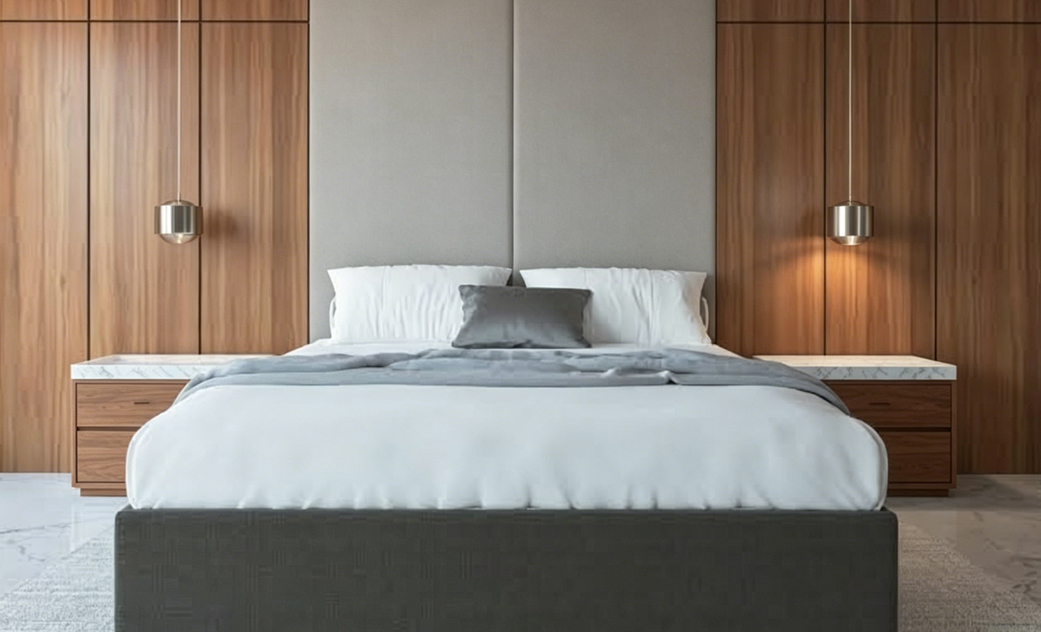
In practice, the choice is not always all custom or all standard. A hotel may specify custom headboards and bedside units for brand impact, then use standard case goods or seating where available products meet the brief.
Compare total project cost, not just the furniture price
Build a like-for-like cost comparison
A low quoted unit price does not automatically produce the lowest project cost. Compare the same scope, quantities, materials, delivery terms, and installation assumptions before deciding. A custom quotation may include design development or project-specific engineering, while a standard quotation may exclude changes needed to make a product fit the room.
- Furniture unit price and any design, tooling, or sample charges.
- Packaging, freight, duties, storage, delivery to floor, and installation.
- Costs of adapting rooms, walls, power access, or other site conditions to fit standard dimensions.
- Replacement parts, repairs, cleaning requirements, and expected maintenance over the operating period.
- Costs and consequences of delays, partial deliveries, or products that do not pass inspection.
Use the comparison table as a first-pass decision tool
The ranges below are planning indicators, not guaranteed quotations or universal industry standards. Actual price and lead time depend on quantity, design complexity, materials, factory capacity, shipping route, and project approvals. Ask suppliers to confirm every assumption in writing.
| Decision parameter | Standard furniture | Custom furniture | What the buyer should verify |
|---|---|---|---|
| Initial unit price | Often lower when the item is a regular production model or in stock | Can be higher when new design work, special materials, or engineering is required | Compare the same quantity, finish, construction, packaging, and delivery scope |
| Design and sample work | Usually limited to existing catalogs and available options | May require drawings, finish samples, prototypes, and approval rounds | Confirm the number of included revisions, approval deadlines, and sample charges |
| Fit with room dimensions | Depends on whether standard sizes work with the room plan | Can be developed around approved room dimensions and project constraints | Check dimensions against coordinated architectural and interior design drawings |
| Brand and finish consistency | Limited to the supplier's existing palette and product combinations | Offers greater control over finishes, details, and coordinated design language | Approve physical samples under suitable lighting and document the approved reference |
| Lead time | Potentially shorter for stocked items; production models still need scheduling | Often longer because design, samples, approvals, and production must be coordinated | Request a dated schedule covering approvals, production, inspection, shipping, and delivery |
| Future replacement | May be straightforward if the model remains available | Can be difficult if a unique specification or material is discontinued | Ask about spare parts, replacement orders, retained specifications, and finish records |
| Best cost condition | Existing specifications suit the property and changes are minimal | Better fit or brand value offsets added development and production costs | Compare total installed cost and expected operating cost, not just factory price |
Choose custom only where the value is clear
Custom furniture can be a sound investment when it resolves a genuine problem, such as an unusable room dimension, a required storage feature, or a brand detail repeated throughout the property. If the design difference is minor and an existing product meets performance and appearance requirements, a standard option may preserve budget for higher-impact areas.
Match the furniture choice to brand identity and room function
Identify where guests and staff will notice the difference
Brand fit is not only a matter of color. Proportion, edge details, hardware, upholstery texture, finish sheen, and the relationship between furniture pieces all contribute to the room's character. Custom work is most useful when the design needs to be distinctive, repeated across multiple room types, or coordinated with fixed architectural features.
- List the brand elements that must be consistent across guestrooms and public areas.
- Separate essential design requirements from preferences that can be adjusted.
- Confirm whether the design must coordinate with existing furniture at a renovation property.
- Review full-size or representative samples where color, scale, or tactile quality is important.
Check practical room use before approving a design
A piece can look correct in a rendering but perform poorly in a working hotel room. Confirm circulation, access to drawers and doors, housekeeping clearance, luggage placement, and the relationship between furniture and electrical outlets. When a room has unusual dimensions, a site survey and coordinated shop drawings can reduce the risk of late alterations.
For a mixed specification, reserve custom development for the items that define the room or solve a clear functional issue. Use standard pieces where the dimensions, finish, and construction already meet the property's documented requirements.
Evaluate durability, stability, cleanability, and day-to-day experience
Furniture does not have battery life, so measure operating performance instead
Battery life is not a relevant performance measure for hotel furniture. The comparable questions are whether a piece remains stable under normal use, resists wear, can be cleaned efficiently, and can be repaired without replacing the entire item. These concerns matter to purchasing teams because a furniture failure can affect guest comfort, room availability, and maintenance workload.
- Stability: Inspect assembled pieces for rocking, loose joints, uneven contact with the floor, and movement during normal use.
- Structural performance: Ask how frames, drawer runners, hinges, supports, and connection points are constructed and checked.
- Surface durability: Review sample finishes for resistance to routine cleaning, scratches, moisture, and expected contact points.
- Upholstery care: Confirm the cleaning method, stain response, replacement options, and suitability for the hotel's use pattern.
- Noise and operation: Open and close drawers and doors repeatedly; check for smooth movement, unwanted rattling, and hardware alignment.
- Maintenance: Ask whether common hardware and replacement components can be identified and reordered.
Use a mockup room or sample inspection to validate actual use
Do not treat a product photograph or finish board as proof of operating performance. If the project allows, inspect a sample or mockup room using the intended flooring, lighting, and cleaning products. Have the project team and housekeeping or maintenance representatives assess the pieces in context.
- Check that measurements, clearances, and circulation match the approved room plan.
- Use drawers, doors, headboards, and other moving or attached components as hotel staff and guests would.
- Inspect surfaces and edges under room lighting and after a routine cleaning test approved by the supplier.
- Record defects, adjustments, and approved changes in a signed sample or inspection report.
These checks are an evaluation method, not a claim that every supplier or product will perform the same way. Ask for applicable test information and warranty terms, then verify that the delivered specification matches the approved sample.
Protect the project schedule with approval and production controls
Map every schedule milestone before placing the order
Custom projects have more approval points, but standard products are not automatically schedule-safe. Stock availability, production slots, finish selection, shipping, and site readiness can all affect delivery. A useful schedule shows the dependencies, not simply an estimated number of weeks.
- Confirm final quantities, room types, and the required delivery sequence.
- Set deadlines for drawings, material selections, sample approval, and purchase order changes.
- Request a production schedule with inspection, packing, dispatch, shipping, and site delivery milestones.
- Confirm what happens if an approval, material, or site-readiness date changes.
- Identify who accepts the goods and how defects or shortages will be documented and resolved.
Reduce late changes by locking specifications clearly
Before production, align the purchase order, drawings, finish codes, hardware, dimensions, quantities, packaging, and inspection criteria. A signed sample without a traceable specification can still lead to disagreements about the delivered product. Keep one controlled record of approved revisions and distribute it to the purchasing, design, site, and supplier teams.
If the opening date is fixed, discuss delivery phasing and contingency options early. A phased plan may prioritize completed rooms or high-priority areas, but it should be checked against storage, installation capacity, and the cost of split shipments.
Weigh the advantages and disadvantages against your project needs
Standard furniture: advantages and disadvantages
- Advantages: Existing designs simplify selection, comparisons can be more direct, and stocked products may support a faster procurement path.
- Advantages: Established models may make future replacement easier when the supplier continues to offer the same specification.
- Disadvantages: Standard dimensions and finish choices may not suit unusual room plans or a distinctive brand brief.
- Disadvantages: The apparent price advantage can shrink if rooms need modification or if the selected item requires compromises in fit or function.
- Applicable groups: Buyers furnishing repeatable rooms with a tight budget, a shorter timeline, and design requirements that match available products.
Custom furniture: advantages and disadvantages
- Advantages: Dimensions, finishes, functions, and coordinated details can be developed around the project brief.
- Advantages: It can support a stronger brand expression or address constraints that standard pieces cannot solve.
- Disadvantages: Design development and approvals add coordination work and can extend the path to production.
- Disadvantages: Special specifications can complicate later replacements unless drawings, material records, and spare-part plans are retained.
- Applicable groups: Owners, operators, designers, and purchasing teams with distinctive design standards, unusual room conditions, or a long-term need for a tailored furniture package.
Consider a hybrid package when requirements vary by item
A hybrid approach often gives the purchasing group more control than choosing one method for every product. Use custom furniture for high-visibility or dimension-sensitive pieces and standard furniture for items that meet the brief without modification. Evaluate each line item on brand impact, fit, lead time, maintenance, and total installed cost.
Use a practical decision checklist before requesting quotations
Prepare a consistent brief for every supplier
A clear brief improves quote comparability and helps suppliers identify risks before they become schedule problems. Share the same information with each bidder wherever possible.
- Provide room plans, dimensions, quantities, room types, and installation conditions.
- Identify mandatory brand details, acceptable alternatives, and finish approval requirements.
- Define expected use, cleaning methods, durability priorities, and relevant maintenance needs.
- State the delivery destination, required dates, delivery phasing, and installation scope.
- Ask for itemized pricing, exclusions, lead-time assumptions, warranty terms, and spare-part availability.
- Request drawings, material specifications, sample procedures, and inspection criteria for custom items.
- Compare the total delivered and installed scope, not a partial factory quotation.
Choose the best fit for the purchasing group's priorities
Choose standard furniture when its available design and specification meet the property's needs and speed or cost certainty is the leading concern. Choose custom furniture when fit, brand expression, or a specific functional requirement justifies additional design coordination. Choose a hybrid package when those priorities differ across the room or across the property.
For a hotel project that needs a tailored specification, ask a Custom Hotel Furniture Manufacturer to explain its design approval process, sample controls, production schedule, inspection approach, and replacement support. Fonte Casa can be considered alongside other qualified suppliers using the same written scope and evaluation criteria. The strongest decision is the one that balances budget, brand, guest use, and schedule with specifications the project team can verify.